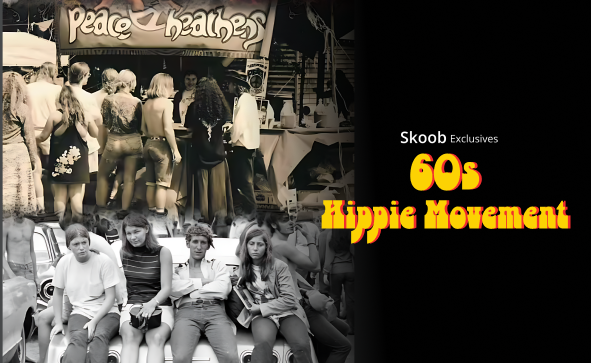
60s Hippie Movement
Was the hippie dream too idealistic?

4.2 (21)

53 mins
Explore the hippie movement of the 1960s, where rock 'n' roll, drugs, and rebellion shaped a generation’s identity. Discover how this counterculture sought to create a peaceful, less materialistic society, and how elements like feminism and environmentalism played a key role.
Ep 1:
Beyond the Stereotype: Reclaiming the Hippie Story
Peace signs and tie-dye hide a deeper revolution—explore how the hippie movement challenged war, materialism, and conformity, powered by a soundtrack that still resonates today.
Ep 2:
Sacred Smoke and Stolen Feathers
Psychedelics promised liberation and clarity, but the hippies' spiritual quest led them to romanticize and appropriate Native American culture in troubling, complicated ways.
Ep 3:
Free Love's Double Edge, Nature's New Prophets
Free love promised liberation but bred contradictions, while the counterculture's reverence for nature quietly seeded today's environmental movements—two revolutions, two very different legacies.
Ep 4:
The Predator in the Family
Charles Manson wasn't born of the hippie dream—he was a predator who exploited its trust, turning open communities into hunting grounds and forever tainting its image.
Ep 5:
Middle America Strikes Back
As draft cards burned and taboos fell, Middle America saw civilization crumbling—discover the fierce backlash that fueled the culture wars still raging today.
Discussions (14)

Dallas
Level 8 · 9 mo agoThe point about cultural appropriation is dead on. Bunch of privileged kids playing dress up because they wanted to identify as victims. It is exactly like the shallow virtue signaling we see on social media today.

Tristan
Level 9 · 9 mo agoClaiming rock defined the 60s is survivor bias. The Sound of Music soundtrack was the best selling album of 1966. The counterculture was a minority.
Clifton
Level 8 · 9 mo agoEveryone mocks the tree hugging but we literally have Earth Day bc of them. They were right about the planet even if they were high while saying it.