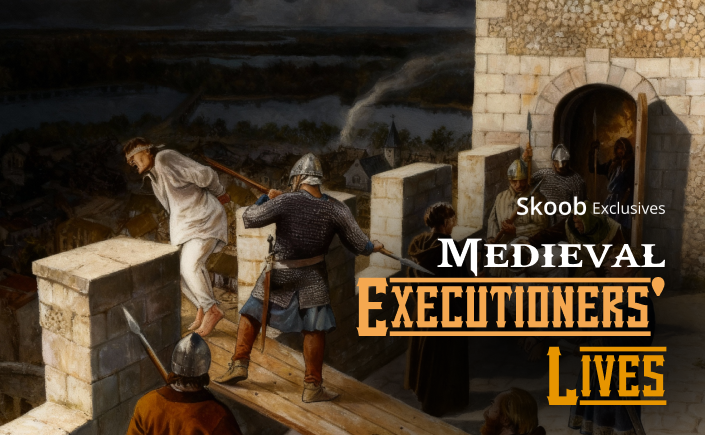
Medieval Executioners' Lives
How were medieval executioners both essential and outcasts?

4.5 (30)

36 mins
Explore the life of medieval executioners and their indispensable role in justice. Discover the brutal training, methods of torture, and public responsibilities that made them feared yet necessary. Learn about their social isolation, secret work, and compensatory privileges that balanced a life of danger and contempt. "
Ep 1:
The Theater of Death and Duty
Step into medieval justice's brutal theater, where public executions taught fear and the executioner emerged as an essential yet reviled figure, born or forced into a life of blood and shame.
Ep 2:
Tools, Torture, and Terrible Mistakes
From the axe to the rack, explore the executioner's grim arsenal and the deadly consequences when a botched blow turned justice into chaos and the crowd's fury turned on him.
Ep 3:
Cursed by Coin and Contempt
Banished beyond city walls yet granted strange privileges, executioners lived as ritually unclean pariahs—surviving through secret trades, dark superstitions, and the grease of the condemned.
Ep 4:
Legacies Written in Blood
Meet history's most infamous headsmen, from Jack Ketch to the Sansons, and uncover the hidden economics, psychology, and enduring legacy of society's most necessary outcasts.
Discussions (13)

Lance
Level 2 · 8 mo agoThe meager income claim is reductive. Selling human fat made many executioners quite wealthy.

Remy
Level 10 · 8 mo agoThe clean strike thing sounds like a myth lol. Bet it was usually just messy butchery in reality.
Chaney
Level 4 · 8 mo agoI'd say framing this as high theater is generous. Most executions were just gross incompetence rather than calculated psychological spectacle.