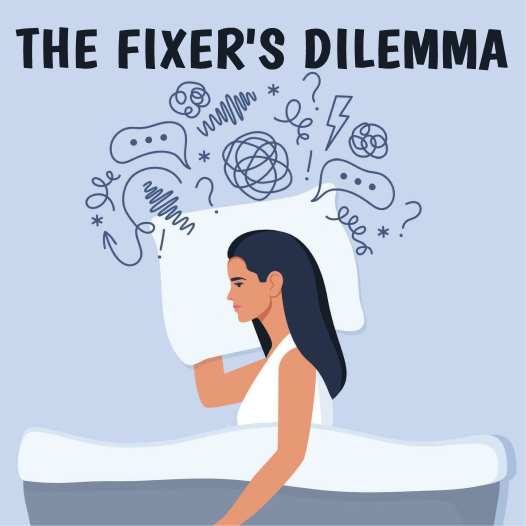
The Fixer's Dilemma
How can trying to fix everything often break your own peace?

4.5 (26)

42 mins
Discover how chronic problem-solving for others drains emotional bandwidth, blurs boundaries, and creates silent resentment. Unravel how the urge to rescue stems from control, fear, and identity tied to usefulness—often leaving the fixer unsupported and exhausted.
Ep 1:
The Trap Behind the Helper
Meet the fixer: the reliable one who swoops in to save everyone else. But is their compulsive helping really a hidden psychological trap rooted in childhood?
Ep 2:
The Disease to Please Exposed
Compulsive helping can curdle into the 'Disease to Please.' We unpack the tell-tale traits of fixers and how their overfunctioning quietly destabilizes entire family systems.
Ep 3:
When Rescuing Backfires
Codependency and compulsive helping collide. Discover why the fixer's rescuing often backfires, stunting growth and breeding resentment in everyone involved.
Ep 4:
Saying Yes Until You Break
Chronic overcommitment is the fixer's silent trap—always saying yes, never counting the cost. Can they finally break free from this exhausting pattern?
Ep 5:
Letting Go, Finding Freedom
In our finale, we explore shifting from rescuer to coach and discover the surprising freedom found in letting go of the need to fix everything.
Discussions (12)

Asher
Level 3 · 8 mo agoIt is actually anxiety regulation disguised as helping. I watch my neighbor do this with her adult children and it is obvious she is just preventing them from learning how to function independently.

Andy
Level 5 · 8 mo agoCalling competence a disorder is a joke 😂 Most people behave like monkeys and need someone to clean up their mess. It's not trauma it's just simple logic.

Lloyd
Level 3 · 8 mo agoHe claims firstborns are the fixers. Rubbish. I am the youngest and I bail the lot of them out.